By Ernesto Parisca
Communications Professional and Strategic Initiatives for Elections

A healthy democracy thrives not just on the freedom to vote, but on each citizen’s ability and opportunity to access that right. To reinvigorate civic participation, Election Management Bodies (EMBs) must not only make voting easier, but also offer a variety of voting options, in-person, by mail, online, early, mobile, and more. Multi-channel voting is more than a convenience, it’s a strategy for inclusion and resilience, designed to strengthen and future-proof democratic infrastructure.
While not a panacea, multi-channel voting is a critical tool for EMBs, nearly all of which are legally required to facilitate voter participation. When voting becomes easier, multi-channel systems evolve from optional innovations to necessary obligations.
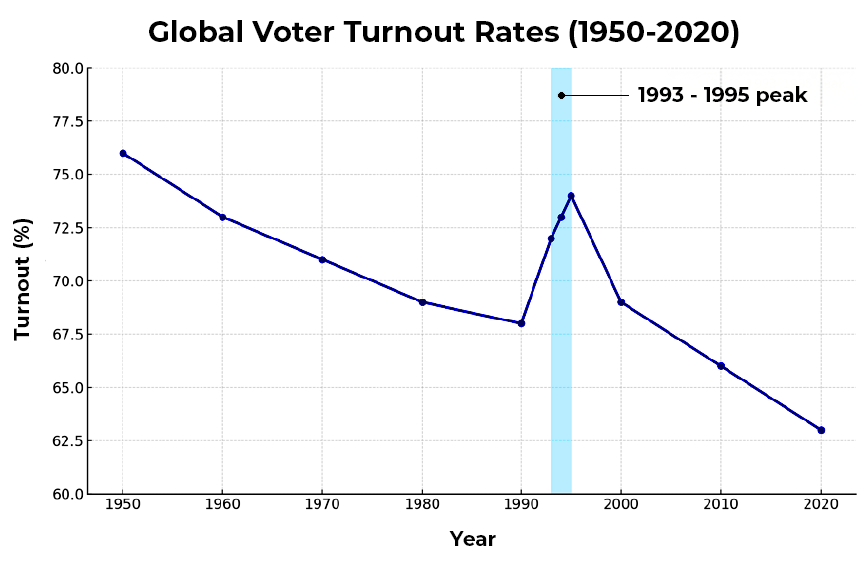
Voting in the Age of Convenience
People live in different time zones, face varied schedules, health conditions, and responsibilities. Geography, transportation, language, technology access, caregiving duties, and even safety concerns can all limit a voter’s ability to participate. Elections that ignore these realities risk excluding voters. If democratic participation is the goal, then access must be universal and flexible.
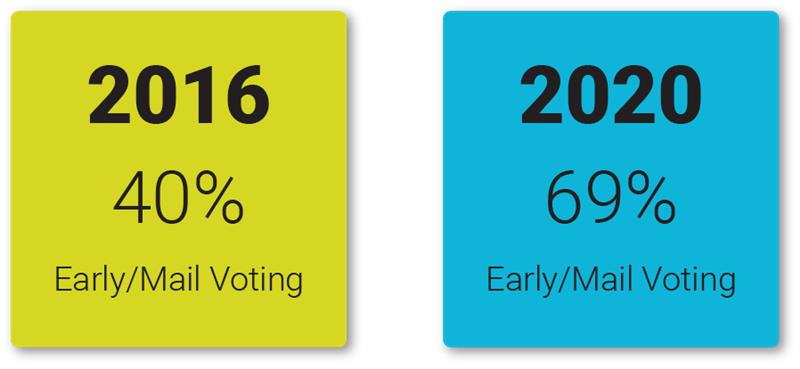
The COVID-19 pandemic reshaped expectations. In the 2020 U.S. election, 69% voted early or by mail, up from 40% in 2016. This shift wasn’t just a health response, it revealed a strong desire for systems that fit modern lives.
Governments are now expected to provide election services as accessible as commercial ones. When they do, via early voting, mobile apps, or vote-anywhere options, participation rises. When they don’t, apathy or frustration follows.
If democratic participation is the goal, then access must be universal and flexible.
An Abundance of Options
All the Ways to Vote
Meeting voters where they are, physically and digitally, makes elections more inclusive, resilient, and user-centric. Below are the key voting channels within a robust multi-channel system.
1.
In-Person Voting
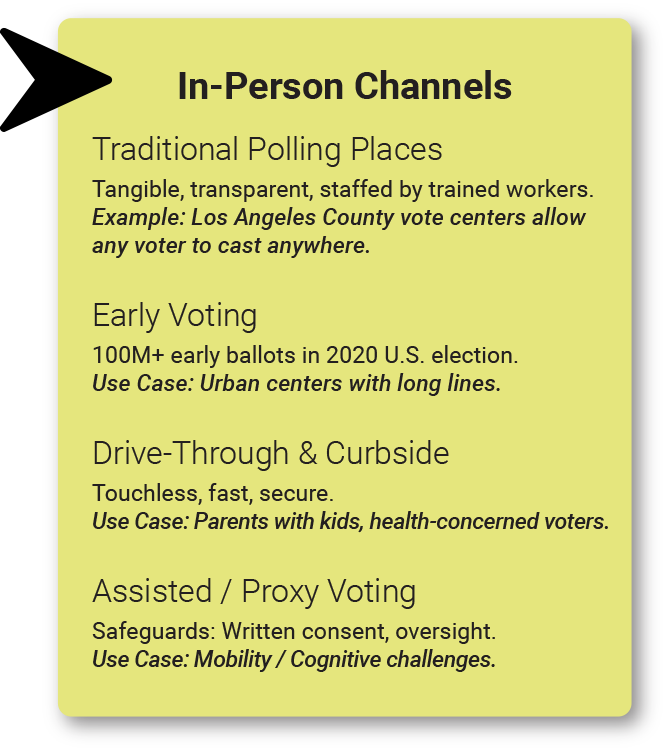
1.1 Traditional Polling Places
Still the backbone of electoral participation, especially where digital divides persist.
- Advantages: Tangible, transparent, and staffed by trained poll workers.
- Use Case: First-time voters, those lacking reliable internet, or those who value the communal experience.
- Modern example: In Los Angeles County, vote centers replace precincts, letting any voter cast a ballot anywhere, enabled by electronic poll books.
1.2 Early Voting
Spreads out participation, reduces stress on systems.
- Evidence of success: In the 2024 election, nearly 60% of voters cast their ballots early or by mail. Only 39.6% of voters went to the polls on Election Day (USA Facts).
- Over 100 million early ballots were cast in the 2020 U.S. election (Brennan Center, 2023).
- Safeguards: Written consent and legal oversight are common.
- Use Case: Vital for voters with mobility or cognitive challenges.
2.
Remote Voting
2.1 Online Voting
Digital platforms offer access from anywhere.
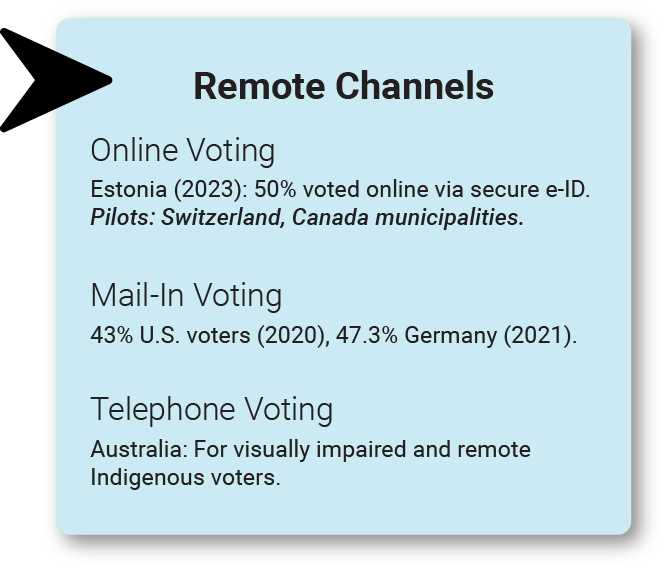
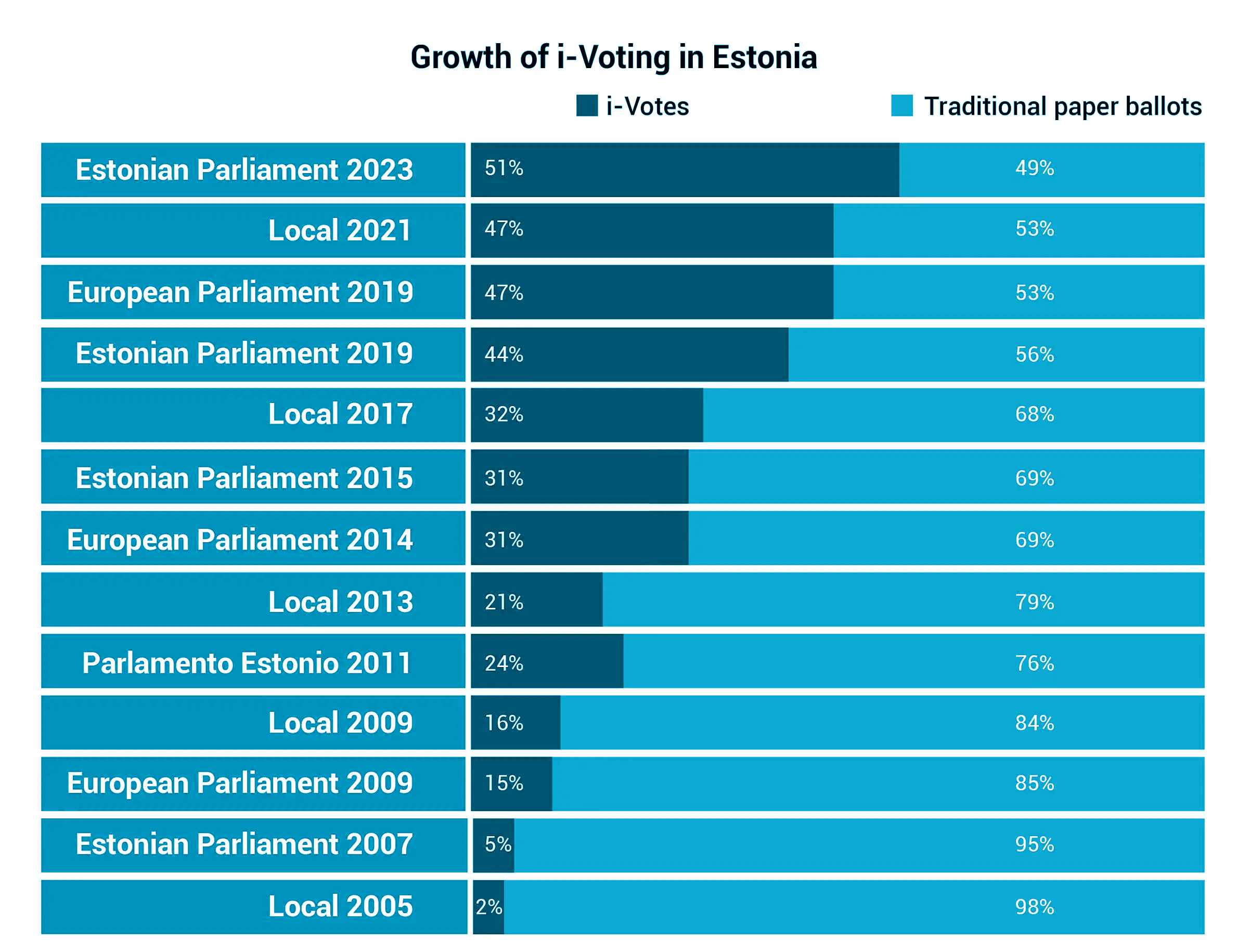
- Estonia leads globally: In 2023, over 50% of Estonian voters voted online via its secure national e-ID system that ensures end-to-end encryption, voter anonymity, and authentication.
- Global pilots: Switzerland and Canadian municipalities have also tested online voting.
- Use Case: Ideal for diaspora, military personnel, or voters in remote areas.
2.2 Mail-In or Postal Voting
Enables voters cast ballots from home, at their own pace.
- Scale proven: In 2020, 43% of U.S. voters mailed in ballots. In Germany, postal voting rose to 47.3% in 2021. By the 2021 Bundestag elections, 47.3% of voters mailed in their votes, far exceeding expectations of experts who merely predicted a third of voters adopting the option.
- Use Case: Elderly voters, rural populations, people with disabilities, or those living abroad.
2.3 Telephone Voting
Though rare, it serves key populations.
- Use in Australia: Designed for voters with visual impairment, those in remote Indigenous communities, individuals with limited internet or who can’t use digital interfaces.
Each method meets voters where they are, not where the system assumes they should be. Offering choice transforms voting from a one-day task to a flexible, inclusive right.
Explore how election modernization is reshaping the voting experience
Innovations Driving Options
Maturing Digital Infrastructure
Estonia’s online voting journey began in 2005 and gained popularity due to its ease and security. By 2023, it became the dominant method. Secure national e-ID systems are no longer experimental, they are foundational.
Public Health Crises and Natural Disasters
COVID-19 pushed jurisdictions to adopt remote options. In 2023, wildfires in Alberta, Canada forced mass evacuations. Yet elections continued using mobile and remote voting, with turnout reaching 60.5%, higher than 2015 (NPR, 2023).
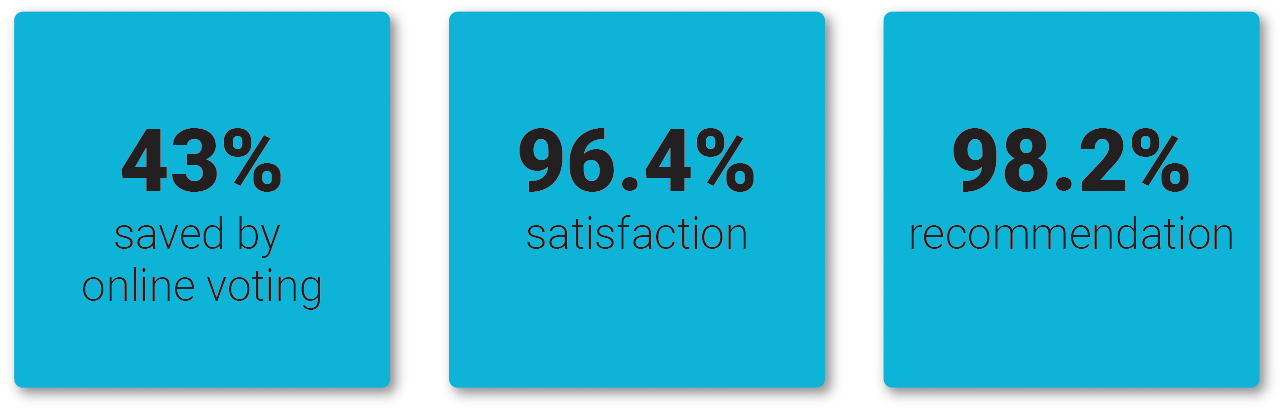
In the Northwest Territories, where wildfires severely limited mobility, online voting proved essential. A study found 43% of voters would not have participated without it. Satisfaction was at 96.4%, with 98.2% recommending the system.
Global Adoption Trends
Mexico, Switzerland and France have piloted e-voting for citizens abroad, part of a growing trend toward flexible participation.
These innovations show that multi-channel voting isn’t just a response to emergencies, it’s a forward-looking model that expands the franchise and protects the democratic process from disruption.
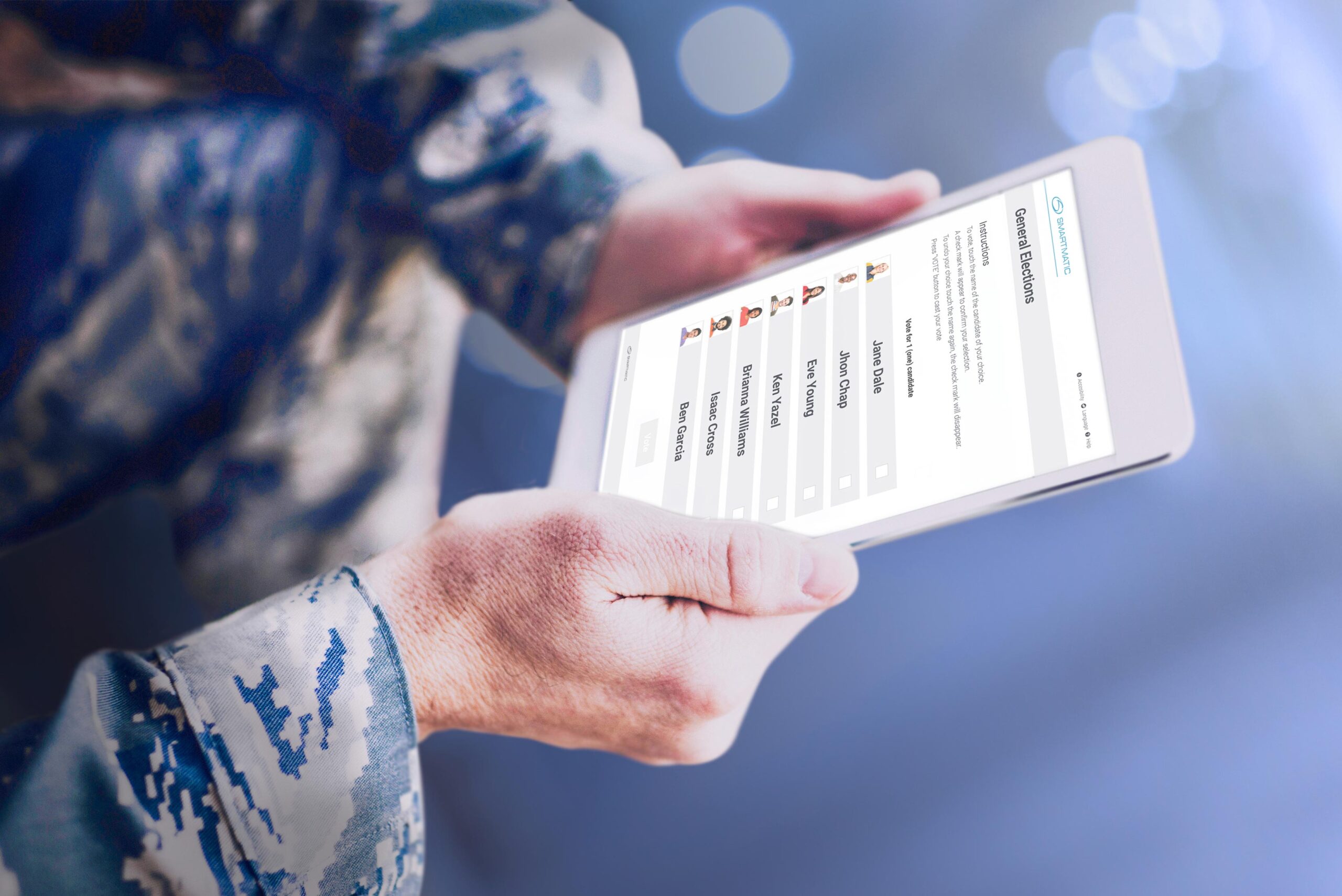
Multi-channel voting isn’t just a response to emergencies, it’s a forward-looking model that expands the franchise and protects the democratic process from disruption.
Challenges
Cybersecurity Risks
The most cited concern. Hacking, manipulation, and data breaches are persistent fears. Estonia uses advanced safeguards, encryption, voter verification, audits, but many countries lag behind.
To protect online voting, EMBs must adopt layered defenses: end-to-end encryption, multi-factor authentication, blockchain-based audit trails, intrusion detection systems, secure server infrastructure, regular independent penetration testing, and above all, transparent processes that build public trust.
EMBs must invest in security: blockchain, secure servers, independent testing, and most importantly, public transparency.
Misinformation and Disinformation
Multiple channels mean more points of confusion. False information can deter participation or damage trust. Coordination with civil society, fact-checkers, and tech platforms is crucial.
Legal and Regulatory Barriers
Outdated laws restrict innovation. In Pakistan, a 2018 internet voting pilot for overseas citizens saw just 1.17% registration, partly due to legal hurdles. Reform and pilot testing are essential to modernize systems.
Cost and Resource Allocation
Building multi-channel infrastructure demand investment. Though long-term digital savings are likely, initial investments could be significant. To mitigate this, international institutions and public-private partnerships may provide funding or technical assistance. Governments must also clearly articulate the cost-benefit proposition to taxpayers, especially in fiscally conservative environments.
Digital Divide and Accessibility
Not everyone can or wants to vote digitally. Ensuring robust offline options, and expanding digital literacy, is essential. Hence, equity must be a design principle from the outset. Offline channels, like mail-in, in-person, and telephone voting, must remain viable and robust. Simultaneously, efforts should be made to expand digital access, provide user-friendly platforms, and offer tech support for those unfamiliar with online systems.

Democracy on Demand
As societies become more digital, diverse, and mobile, static voting systems no longer suffice. Citizens expect flexibility and responsiveness from democratic institutions, just as they do from services they use every day.
Multi-channel voting reduces barriers, boosts equity, and fosters a more representative democracy. But such systems require vision, collaboration, and political will. Those jurisdictions that embrace this shift will not only expand access, they will redefine democratic participation for the 21st century.
When people can vote in the way that works best for them, democracy becomes stronger, more inclusive, and better prepared for the future.
Democracy works best when everyone can cast their vote their way.

Ernesto Parisca
Communications Professional and Strategic Initiatives for Elections
With more than 12 years in the electoral industry, Ernesto Parisca has supported election projects across the United States, Latin America, Europe, and Africa. He is a communications professional with extensive experience designing and implementing strategic initiatives for electoral technology projects. His work focuses on strengthening institutional credibility and public trust through evidence-based communication, crisis preparedness, and reputation management.
Holding a Master of Business Administration and with an early background in classical music, Ernesto integrates analytical discipline with creative insight. As Director of Electoral Marketing at Smartmatic, he contributes to the development of integrated communication strategies that highlight transparency, innovation, and democratic resilience in complex environments.