By Mayerlin Perez
Strategic Communications and Institutional Reputation Management

Recent elections across the globe have seen the “None of the Above” (NOTA) voting option emerging as a powerful new democratic tool, one that allows voters to formally express dissatisfaction with choices while staying fully engaged in the electoral process.
This growing phenomenon does not signal voter apathy but is rather a sophisticated form of democratic engagement that demands greater accountability and better choices. Recent developments in several countries demonstrate how NOTA voting is reshaping electoral landscapes and forcing political institutions to reconsider their approach to candidate selection and governance.
NOTA is not about rejecting democracy—it’s about demanding better democracy.
The Global Expansion of NOTA Options
India’s Judicial Implementation
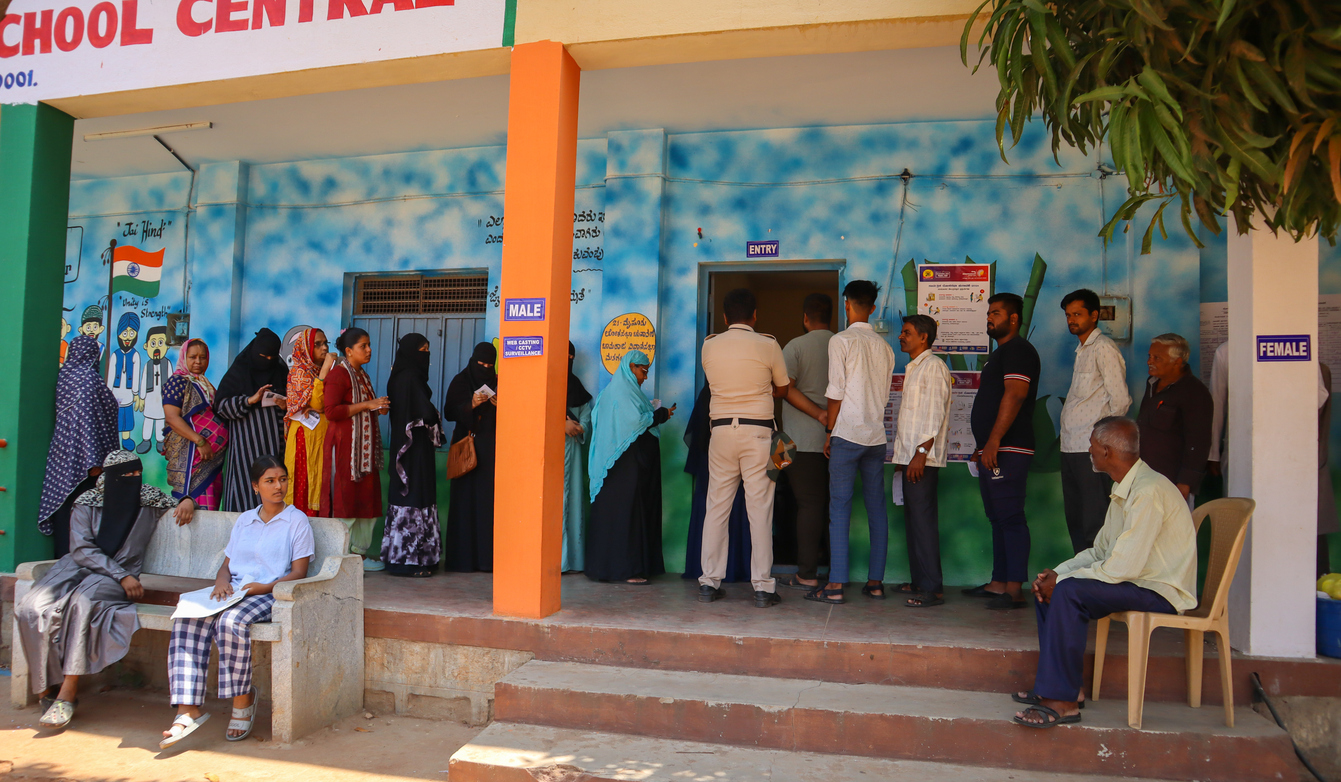
In 2013, India’s Supreme Court mandated the introduction of NOTA in electronic voting machines through a landmark judgment in response to a petition filed by the People’s Union for Civil Liberties (PUCL). The court directed the Election Commission to provide a NOTA button, ensuring voters could exercise their right not to vote for any candidate while maintaining their right to secrecy.
Key Facts – India’s NOTA
– Introduced: 2013 (by Supreme Court mandate)
– Purpose: Protect secrecy, allow rejection of all candidates
– Effect: Symbolic, but reshaped candidate debates
– Described as: the maturing of India’s democracy
This significant judgment recognized that protecting voter secrecy was essential for free and fair elections, and that citizens should have the option to reject all candidates without sacrificing their participation in the democratic process.
The Supreme Court of India also emphasized that by allowing NOTA, the country could encourage “people of high moral and ethical values” to be chosen as representatives, potentially improving governance by pushing political parties to nominate more qualified candidates. Although critics have noted that NOTA votes in India are currently symbolic and don’t invalidate elections even if they receive the highest count, the option has been described as “the maturing of India’s democracy”.
Colombia’s Binding Blank Vote System
Unlike India’s advisory NOTA system, Colombia has implemented a more powerful version of the protest vote. The country’s constitution provides that if blank votes (“el voto blanco”) constitute the majority of ballots cast, the election must be repeated with new candidates.
This powerful electoral tool was dramatically demonstrated in 2011 in Bello, a suburb of Medellín, where the only mayoral candidate, Germán Londoño of the Conservative Party, unexpectedly lost by almost 20 percent to the blank vote. With more than 50 percent of voters choosing the blank option, Bello was required to hold another mayoral election with entirely new candidates.
This case represents one of the most striking examples of NOTA’s potential impact when given binding legal power. The blank vote victory wasn’t merely symbolic, it forced substantial changes in the electoral offering and demonstrated voters’ refusal to accept unpalatable candidates, even when they ran unopposed.
Spain’s Blank Vote Impact
In Spain, the blank vote offers another variation of the NOTA concept. A recent case at the Autonomous University of Madrid (UAM) demonstrated its practical consequences for academic governance. In April 2025, the institution announced it would repeat the election for rector after the sole candidacy failed to reach the required minimum of 50% of valid votes, obtaining only 44.67% while the rest were cast as blank ballots.
UAM Rector Elections (2025)
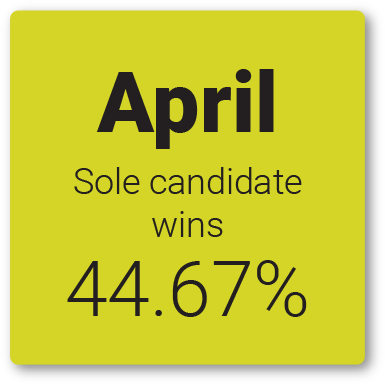
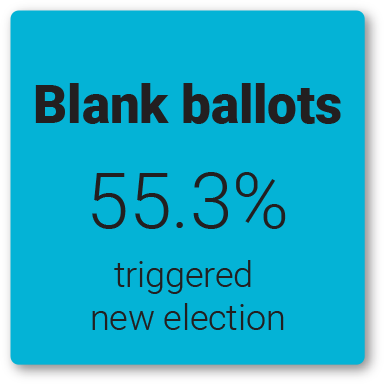
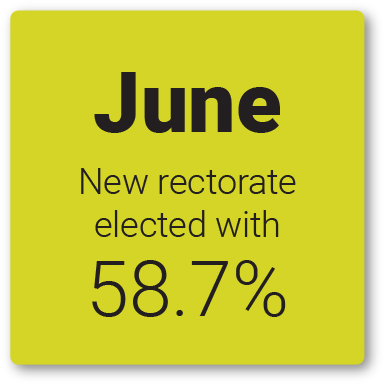
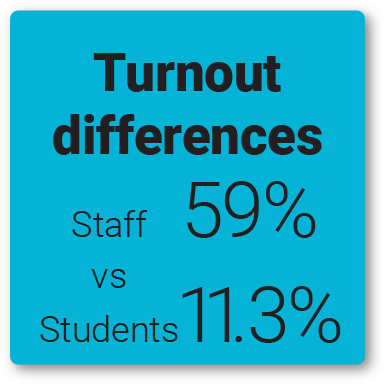
This unprecedented situation for the university led to a second vote in June, this time with more than one candidacy, in which a new rectorate was elected with 58.7% of the weighted votes. Participation varied significantly among the different sectors of the university community, with administrative and technical staff being the most active (59%) and students the least (11.3%). This case shows how the blank vote can act as a powerful mechanism for institutional change, even in specialized electoral contexts.
Nevada’s Unique American Example
In the United States, Nevada stands as the only state to offer a formal “None of These Candidates” option, having included it on ballots since 1975.
Nevada’s NOTA
– Introduced: 1975
– Still active: presidential and statewide races
– Impact: Registers protest votes, but does not invalidate elections
This option has been used by many voters to register protest votes, particularly during presidential elections when candidates from major parties fail to inspire confidence. While Nevada’s system does not invalidate elections if NOTA wins, it nonetheless provides American voters with an official channel to express discontent with the available choices.
Explore how election modernization is reshaping the voting experience
The Democratic Significance of NOTA
Enhancing Electoral Accountability
The NOTA option serves multiple functions within democratic systems. Rather than merely expressing discontent, it creates tangible pressure for improvement in candidate selection and political accountability.
NOTA turns dissatisfaction into accountability.
In Colombia, the binding nature of the blank vote forces political parties to be more responsive to voter concerns and to nominate candidates who can genuinely earn public support. Similarly, India’s Supreme Court explicitly stated that the NOTA button “can encourage political parties to nominate a sound candidate,” highlighting its role in improving the quality of representation.
Redefining Political Participation
NOTA challenges traditional notions of political engagement by transforming abstention into active protest. Instead of staying home, which can be interpreted as apathy or contentment, voters can formally register their dissatisfaction while still participating in the electoral process. This redefinition of political participation is particularly valuable in contexts where voting is either mandatory or strongly encouraged as a civic duty.
The Colombian example demonstrates that NOTA is not a rejection of democracy but rather a demand for its improvement.
The right to reject is also the right to demand better choices.
When Bello’s voters rejected the sole mayoral candidate linked to a disgraced former official, they weren’t abandoning the democratic process, they were using a democratic tool to demand better options. Similarly, at the Universidad Autónoma de Madrid, the blank votes that prevented the incumbent rector’s reelection represented an active choice by the university community rather than disengagement.

Future Implications of NOTA Voting
Potential for Electoral Reform
As NOTA voting gains prominence globally, it raises important questions about electoral design and reform. The contrast between binding systems like Colombia’s and advisory ones like India’s highlights different approaches to incorporating voter dissatisfaction into formal electoral outcomes.
NOTA Milestones
– 1975: Nevada introduces “None of These Candidates”
– 2011: Bello, Colombia: Blank votes overturn mayoral race
– 2013: India’s Supreme Court mandates NOTA
– 2025: Madrid University blank vote triggers repeat election
The effectiveness of NOTA in promoting better governance may ultimately depend on whether it has real consequences for election results or remains a symbolic gesture.
The expansion of NOTA options worldwide suggests growing recognition of its value. Peru and Bolivia have implemented systems where empty ballots can trigger new elections, similar to Colombia’s approach. In the United Kingdom, advocacy organizations like “None of the Above UK” have worked since 2010 to establish a formal and binding NOTA option on ballots. These developments indicate a broader trend toward institutionalizing protest votes within democratic frameworks.
Strengthening Democratic Resilience
Rather than undermining democracy, NOTA options may contribute to its resilience by providing formal channels for expressing dissatisfaction. By allowing voters to reject all candidates without abandoning the electoral process entirely, NOTA systems acknowledge the legitimacy of protest while keeping it within democratic institutions. This approach may be particularly valuable in contexts where trust in political institutions is low but commitment to democratic principles remains strong.
As democracies worldwide face challenges of legitimacy and representation, NOTA options offer a constructive path for channeling discontent. By formally recognizing voters’ right to reject all candidates, these systems acknowledge that meaningful democracy requires genuine choice and responsive institutions. The continued expansion of NOTA mechanisms suggests growing recognition of their value in strengthening democratic accountability and encouraging better governance through informed voter choice.

Mayerlin Perez
Strategic Communications and Institutional Reputation Management
With a strong foundation in international affairs, Mayerlin Perez specializes in strategic communications and institutional reputation management. Her background in international studies and communications has shaped her ability to craft evidence-based narratives that strengthen public trust in election technology.
As Communications Coordinator at Smartmatic, she has developed extensive experience in media relations, content strategy, social media management, and crisis communication, contributing to the successful communication of election technology projects across Latin America and beyond. Mayerlin holds a Master’s degree in Online Journalism from Universidad Monteavila and a Bachelor’s degree in International Affairs from Universidad Central de Venezuela.